PRACTICAL GUIDE · PROJECT MARGIN
A busy project can still be the least profitable work in the portfolio.
Revenue alone cannot show whether a client project was healthy. The project record needs a fee, a time log and direct expenses connected by one stable ID. That structure reveals margin while the work is active and after it closes.
Core takeaway
Track fee, labor and direct expenses with the same project ID, then review margin and collections together before quoting the next engagement.
1. Create a master project record
Store project ID, client, fee, budget, dates, status and amount collected. The ID connects time and expenses without relying on a project name that may change.
2. Convert time into an internal labor cost
The workbook multiplies project hours by the internal cost rate entered by the user. This is a management assumption, not payroll, compensation, accounting or tax treatment.
3. Add direct expenses before calculating margin
Travel, subcontractors, materials, transaction fees and other project-specific costs reduce profit even when they do not appear in the time log.
4. Read active margin as an interim signal
An active project may still incur hours and costs. Use margin to spot drift, not to declare a final result early. Compare completed projects separately and review outstanding fees beside profit.
Educational organization and planning content only. It does not replace tax, legal, accounting, financial or technical advice where applicable.
WORKFLOW CHECKLIST
The complete routine in six steps.
- 01Assign a stable project ID
- 02Record agreed fee and budget
- 03Log every hour
- 04Apply an internal labor cost
- 05Add direct expenses
- 06Review margin and collections together
APPLY THE METHOD
Use a workbook that already connects the steps.
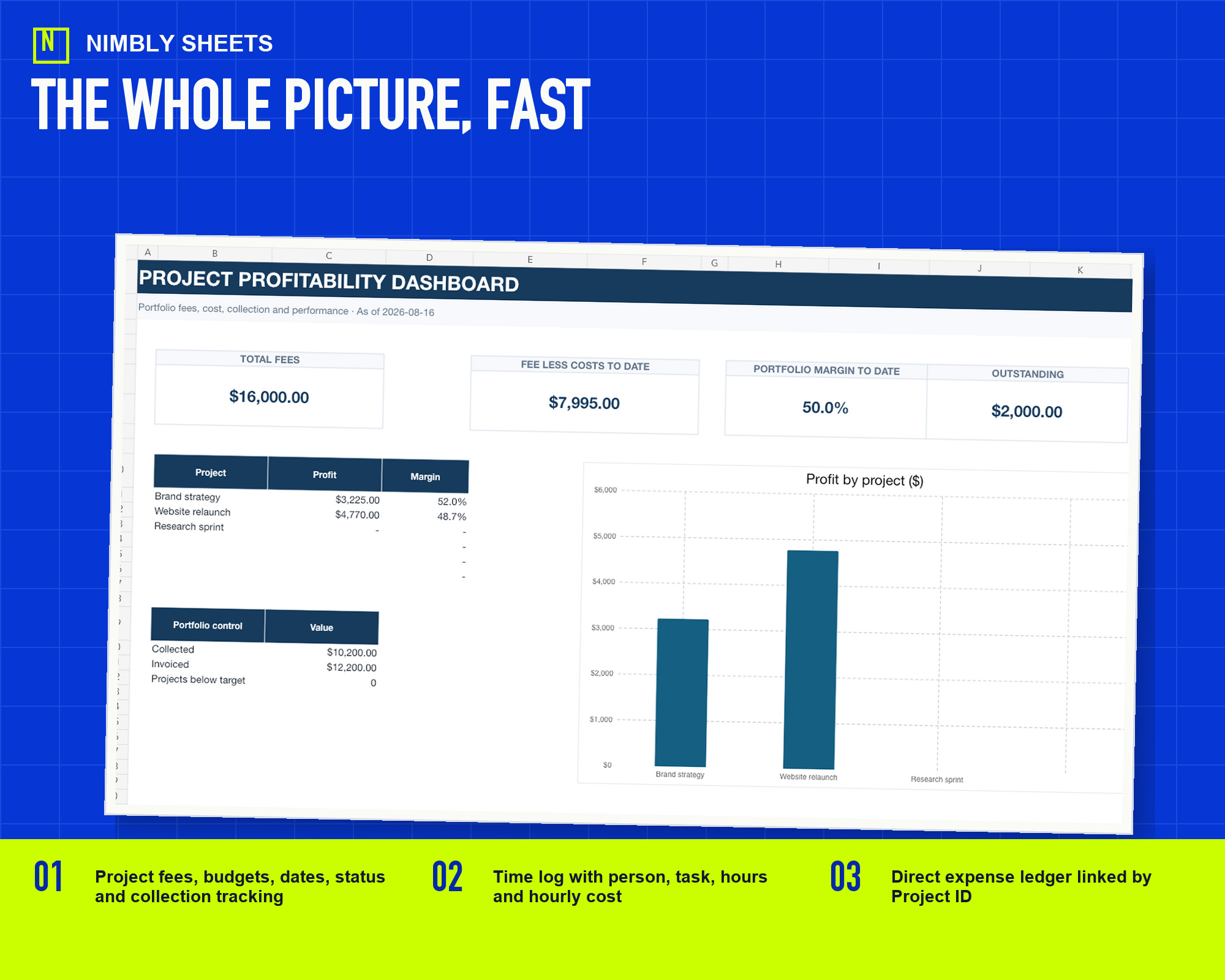
The template turns this method into editable inputs, checks and summaries with realistic example rows.
Client Project Profitability Tracker
FREQUENTLY ASKED QUESTIONS
Before you begin.
Does the workbook select an internal hourly cost?
No. It applies the management assumption entered by the user. That value is not payroll, compensation, accounting or tax treatment.
Is active-project profit final?
No. It is an interim view based on recorded work and costs so far. Review the final result after delivery and complete cost capture.
How does the workbook separate unpaid fees from its project result?
It keeps the entered project fee and outstanding amount in separate fields. The internal result does not prove that cash was collected or determine accounting treatment.