PRACTICAL GUIDE · VARIABLE INCOME
Received income and unpaid invoices belong in separate planning inputs.
A fixed-income scenario assumes the same amount arrives on a predictable date. An irregular-income scenario can instead record cash received, keep entered allocations separate and calculate the balance that remains from those inputs.
Core takeaway
Keep received income, invoices, expenses and editable allocations separate. The workbook calculates a scenario but does not select spending priorities or determine sufficiency.
1. Start with cash received
Keep expected invoices and received cash in separate fields. Record the date, source and amount so the scenario does not count an invoice and its later receipt as the same kind of entry.
2. Keep entered allocations in a consistent order
Use separate user-defined fields for tax planning, entered costs, contractual payments, annual-cost allocations and other amounts. The workbook applies the order entered; it does not select priorities or assess whether an allocation is appropriate.
- Editable tax allocation
- Entered personal and business costs
- Entered debt or contractual payments
- Emergency and annual-cost allocations
- Remaining balance in the scenario
3. Build sinking funds for uneven costs
Annual software, insurance, equipment and time off are predictable even when they are not monthly. Divide the target by the remaining contribution periods and track progress separately from general savings.
4. Carry the plan forward without hiding shortfalls
If the entered allocations exceed received income, keep the calculated gap visible and do not reclassify unpaid invoices as received cash. The workbook records the difference but does not decide how it should be addressed.
Educational organization and planning content only. It does not replace tax, legal, accounting, financial or technical advice where applicable.
WORKFLOW CHECKLIST
The complete routine in six steps.
- 01Record received income in the active scenario
- 02Enter tax and savings assumptions
- 03List essential and flexible expenses
- 04Create sinking-fund targets
- 05Calculate the balance after entered allocations
- 06Carry shortfalls forward visibly
APPLY THE METHOD
Use a workbook that already connects the steps.
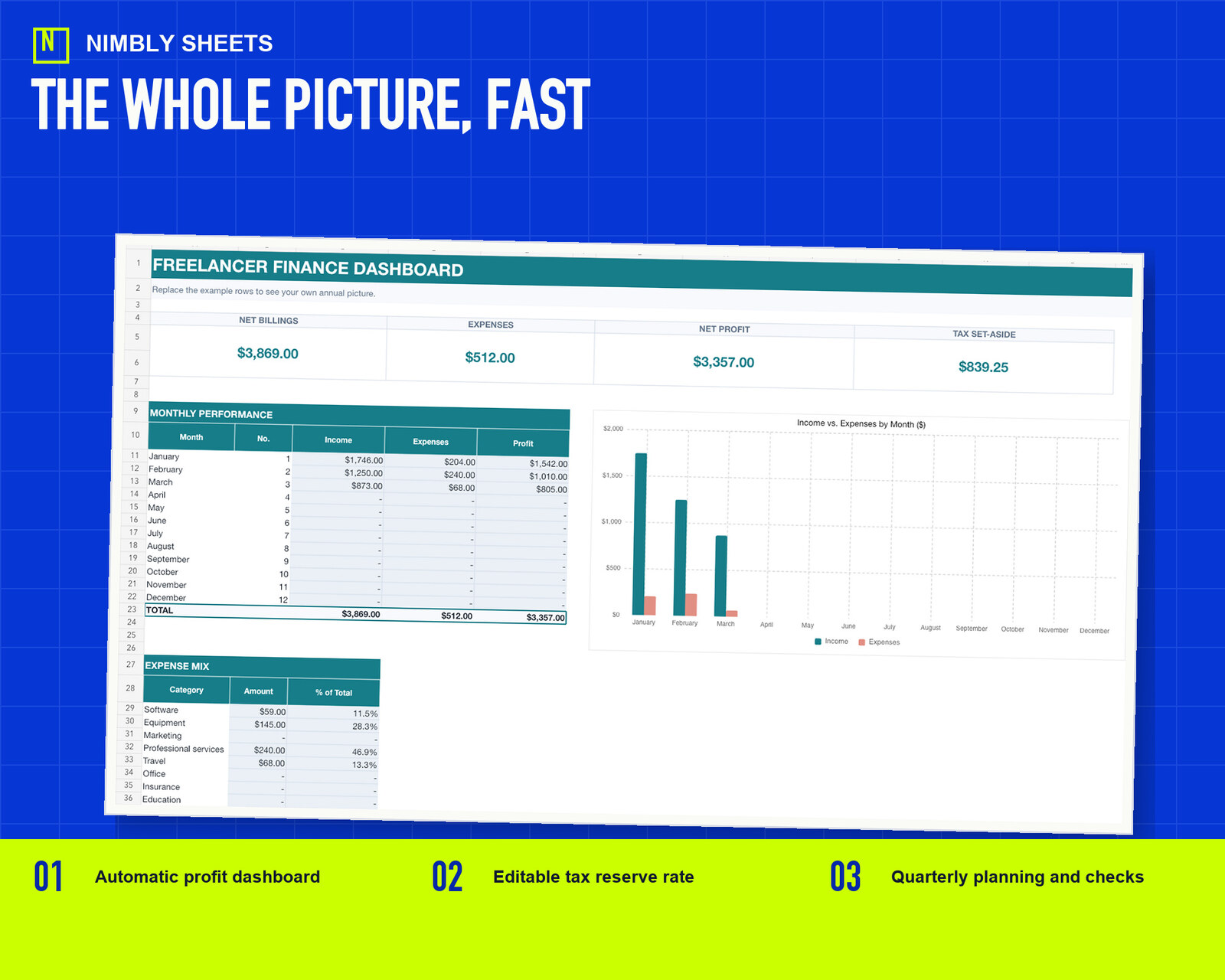
The sale combines the workbook from this guide with two other editable workbooks, three Google Sheets import guides, and a start guide in one ZIP file.
Freelancer Finance Toolkit
FREQUENTLY ASKED QUESTIONS
Before you begin.
Does the workbook determine an emergency-fund target?
No. It applies the target entered by the user and does not assess whether that amount is sufficient for any household.
What happens if the best month is used as the baseline?
The scenario assumes that higher income repeats. A received-income or lower baseline produces a different result; the workbook does not select one for the user.
Is the tax pot my final tax bill?
No. It is a planning separation. Verify actual obligations for your jurisdiction and circumstances.